Drawer 02 of 06
Clouds & Sky Optics
Clouds and atmospheric optical phenomena, named by the WMO International Cloud Atlas.
3 entries filed
Entries in Clouds & Sky Optics
- No. 0003
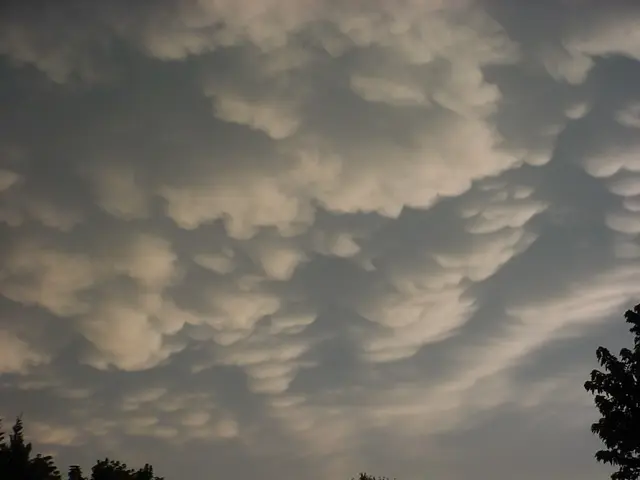
Mammatus Clouds: Sinking Pouches That Fade in About 10 Minutes
Mammatus clouds are pouches of sinking cloud under a storm anvil. See how big the lobes are, how long they last, why they form, and whether they mean danger.
Photo credit
"Mammatus Clouds Norman OK 13JUN2005 0156 UTC" by Katharine Kanak — https://commons.wikimedia.org/wiki/File:Mammatus_Clouds_Norman_OK_13JUN2005_0156_UTC.jpg — CC BY-SA 4.0 (https://creativecommons.org/licenses/by-sa/4.0/)
- No. 0009
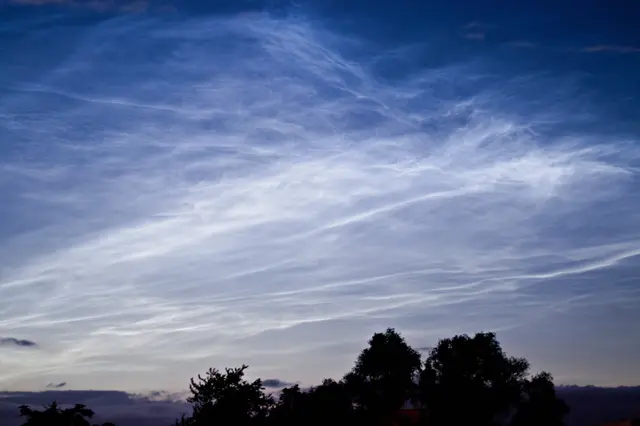
Noctilucent Clouds: The Sky's Highest Ice, Made Only in Summer
Noctilucent clouds are ice about 80 km up that shine after sunset. See why they form only in summer, when and where to look, and how to tell them from cirrus.
Photo credit
"Noctilucent Cloud over Rostock II" by okruz — https://commons.wikimedia.org/wiki/File:Noctilucent_Cloud_over_Rostock_II.jpg — CC0 1.0 (https://creativecommons.org/publicdomain/zero/1.0/)
- No. 0015
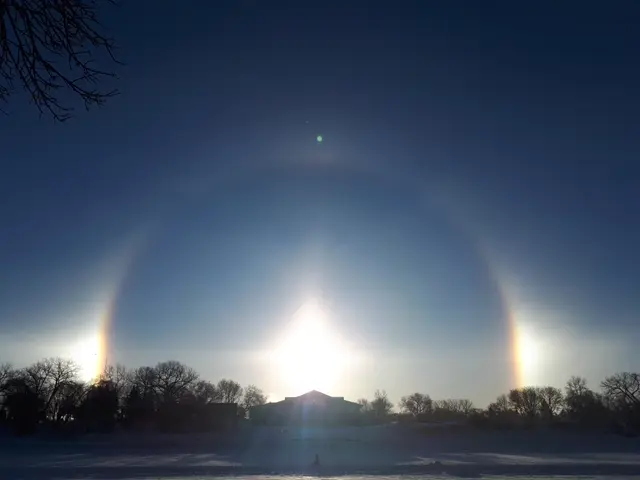
Halos, Sundogs and Coronas: Only the Halo Stays Put at 22°
A 22° halo never changes size, sundogs slide outward as the Sun climbs, and coronas are wider when droplets are smaller. How to tell them apart and look safely.
Photo credit
"20180201 Winnipeg Sundog and halo" by Tenbergen — https://commons.wikimedia.org/wiki/File:20180201_Winnipeg_Sundog_and_halo.jpg — CC BY-SA 4.0 (https://creativecommons.org/licenses/by-sa/4.0/)