Drawer 06 of 06
The Microscopic
Microscopic organisms.
3 entries filed
Entries in The Microscopic
- No. 0001
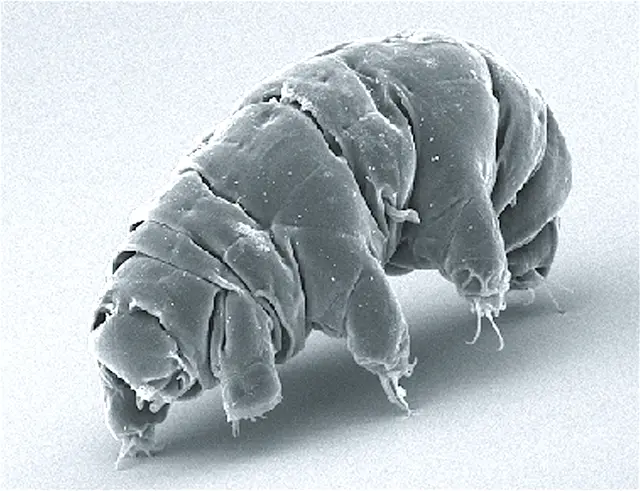
Tardigrades: Heat, Sunlight in Space and Fast Impacts Can Kill Them
Shaded and dried, tardigrades survived 10 days in open space. Awake, a day at 37 °C stopped about half of one species. See where each survival record breaks.
Photo credit
"SEM image of Milnesium tardigradum in active state" by Schokraie E, Warnken U, Hotz-Wagenblatt A, Grohme MA, Hengherr S, et al. (2012) — https://commons.wikimedia.org/wiki/File:SEM_image_of_Milnesium_tardigradum_in_active_state_-_journal.pone.0045682.g001-2.png — CC BY 2.5 (https://creativecommons.org/licenses/by/2.5/)
- No. 0007
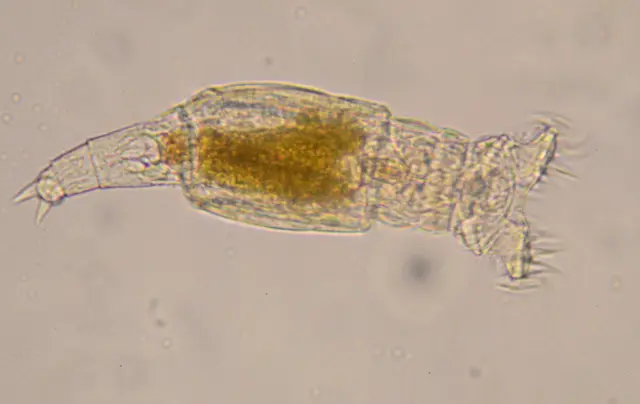
Bdelloid Rotifers: Hundreds of Species, Not One Known Male
No male bdelloid rotifer has ever been reported. Learn how most of these sand-grain-sized animals dry out at any age, which ones cannot, and why 'no sex' is debated.
Photo credit
"Philodina acuticornis 295469" by Don Loarie — https://commons.wikimedia.org/wiki/File:Philodina_acuticornis_295469.jpg — CC BY 4.0 (https://creativecommons.org/licenses/by/4.0/)
- No. 0013
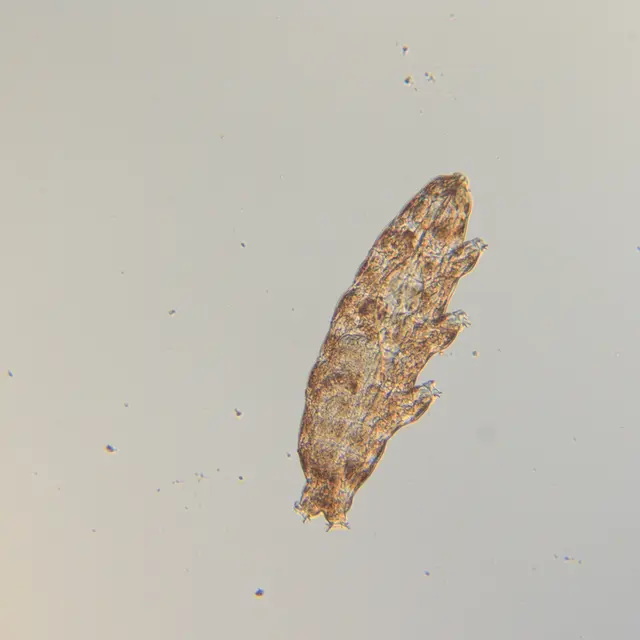
Moss Animals: Tardigrade, Rotifer or Nematode? Look for Legs, Wheels or Waves
Wet moss holds tardigrades, rotifers and nematodes. Clawed legs, a crown of beating cilia or a legless S-shaped thread usually tells you which one you see.
Photo credit
"iNaturalist photo 450375233" by Lukas Schärer (iNaturalist observation 251679671) — https://www.inaturalist.org/photos/450375233 — CC BY 4.0 (https://creativecommons.org/licenses/by/4.0/)