Deep explainerNo. 0001
Tardigrades: Heat, Sunlight in Space and Fast Impacts Can Kill Them
Published Updated
Parts of this entry10 parts
Spec card
Size analogy (length)≈ 1 grain of medium sandScale: Wentworth "medium sand" class, 0.25–0.5 mm (USGS Open-File Report 2006-1195 grain-size chart)
- Common name
- Tardigrade, water bear
- Scientific name
- Tardigrada (a phylum)Source: GBIF Backbone Taxonomy, usageKey 14
- Group
- Own animal phylum; usually placed near arthropods, sometimes near nematodesSource: see article Sources
- Described species
- About 1,300Source: Jönsson 2019; Neves et al. 2020
- Size band
- Usually 0.25–0.5 mm; largest reported at about 1 mm or up to 2.1 mm, depending on the sourceSource: Jönsson 2019 (usual range; about 1 mm max); Erdmann & Kaczmarek 2017 (up to 2.1 mm); sources differ
- Distribution / habitat
- Worldwide: marine, freshwater, and damp land habitats such as moss, lichen and soilSource: Neves et al. 2020; Erdmann & Kaczmarek 2017
- Depth band
- From the deep ocean to mountaintopsSource: Erdmann & Kaczmarek 2017
- Adult life span
- About two to several monthsSource: Erdmann & Kaczmarek 2017, citing Nelson et al. 2015
- Three ID features
- Four pairs of stubby legs, most often ending in claws
- a head plus four body segments
- a flexible cuticle that is smooth or carries plates and spines
- The misidentification twin
- Not yet verified
Download this card as CSV tardigrade-spec-card.csv · CC BY 4.0File label (JSON): name, license, publisher
Main images
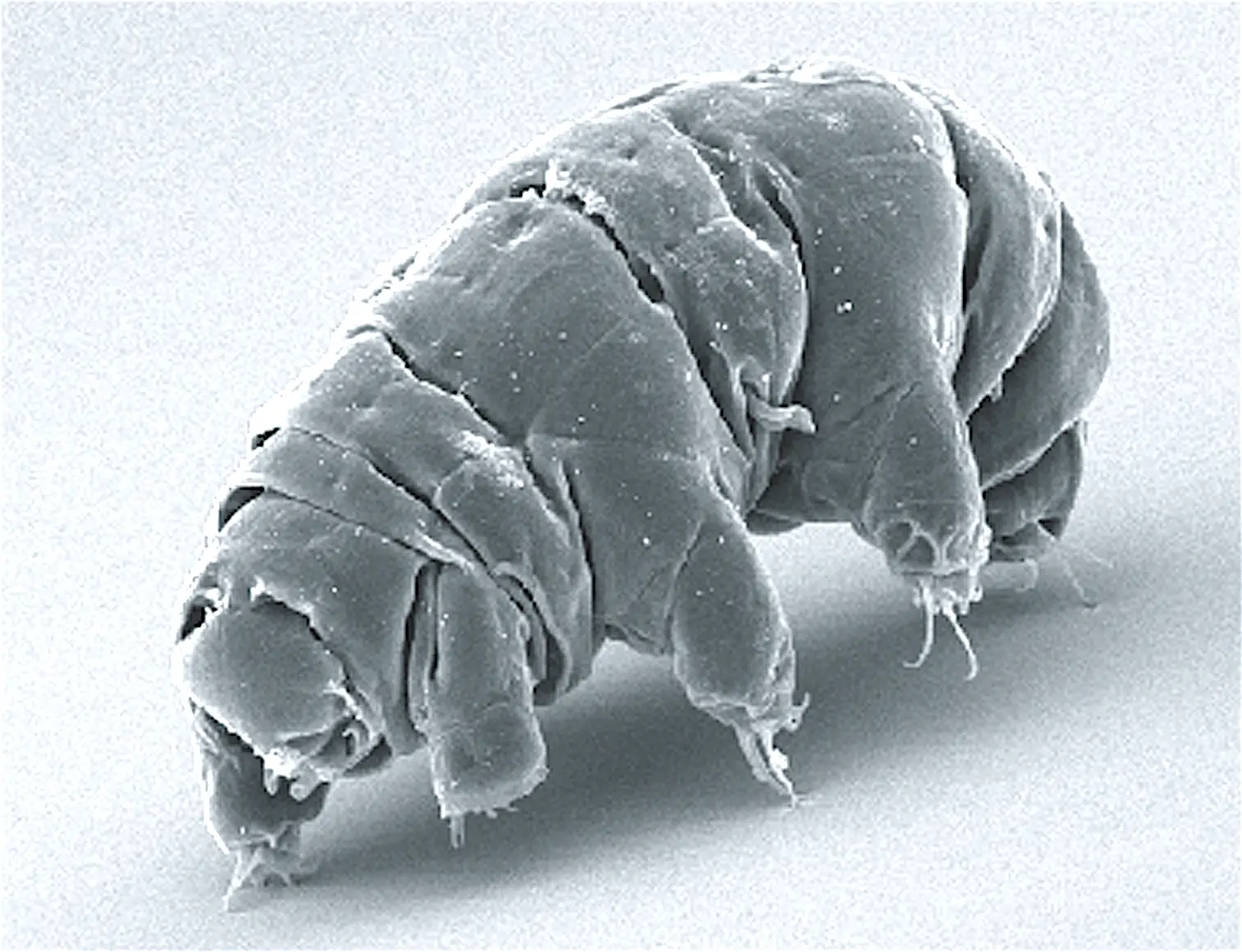
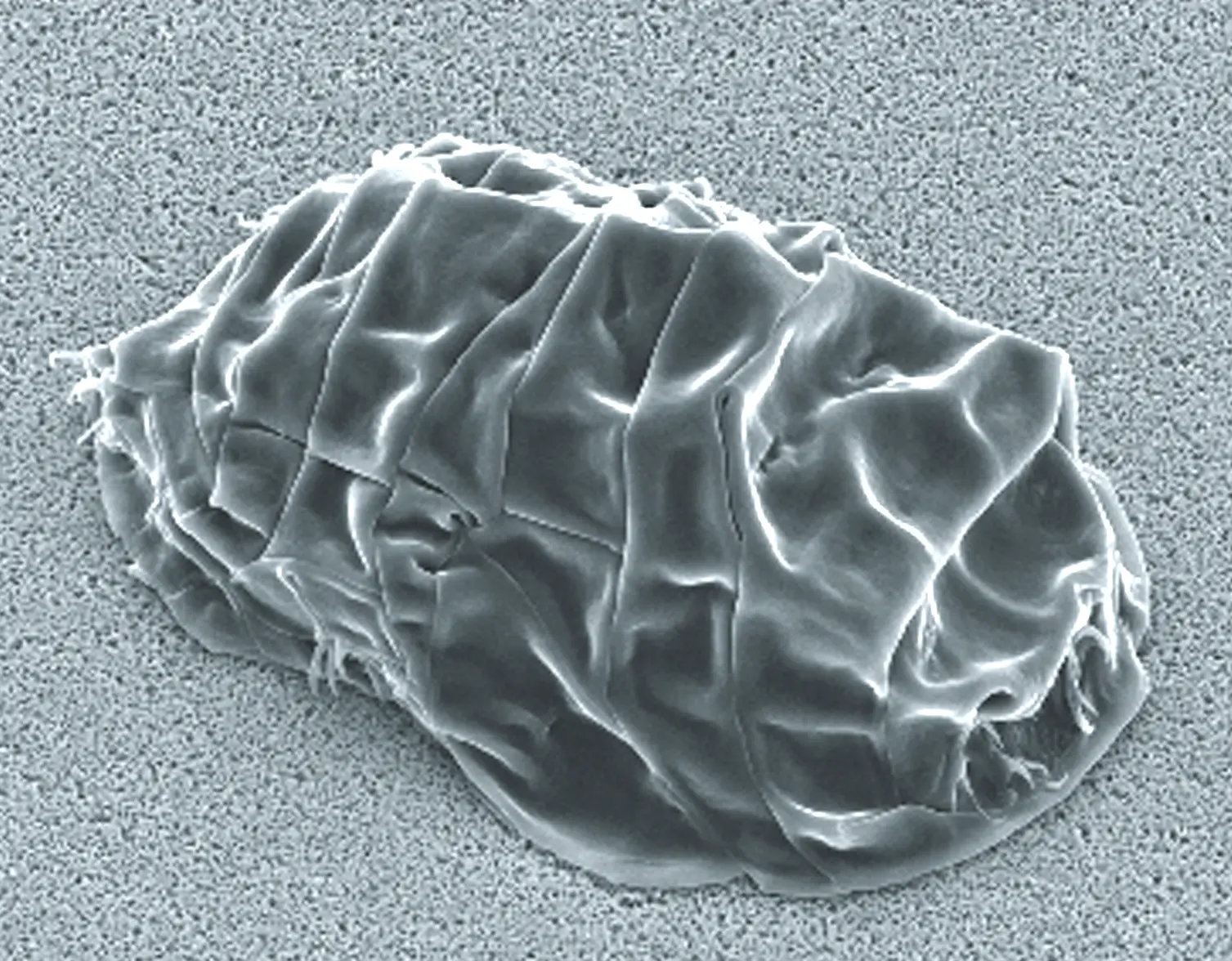
The same species awake and dried into a tun.
The short answer
Dried out, most of one tardigrade species comes back from an hour at 80 °C. Awake and wet, the same species does not come back from a day at 40 °C. The species is Ramazzottius varieornatus. That gap is the real story of tardigrade toughness.
Tardigrades, or water bears, are eight-legged animals usually 0.25 to 0.5 mm long, about the size of a grain of medium sand. They live worldwide in the sea, in fresh water and in damp moss, and they are not indestructible. In the ledger below, almost every record was set while the animals were dormant, either dried into a folded "tun" or frozen. Radiation is the one test where awake animals did about as well as dried ones.
What is a tardigrade?
The name "water bear" gets the water right and the bear wrong. Tardigrades are not bears or insects but a phylum of their own, Tardigrada, with about 1,300 described species as of 2019. Most analyses place them near the arthropods, the group that includes insects and crabs. Some studies, though, suggest a closer link to nematodes.
The body is a head plus four segments, each carrying one pair of unjointed legs that most often end in claws. A flexible outer layer called a cuticle covers the body. In one main lineage the cuticle is smooth and often see-through or milky white. In the other, it often carries plates.
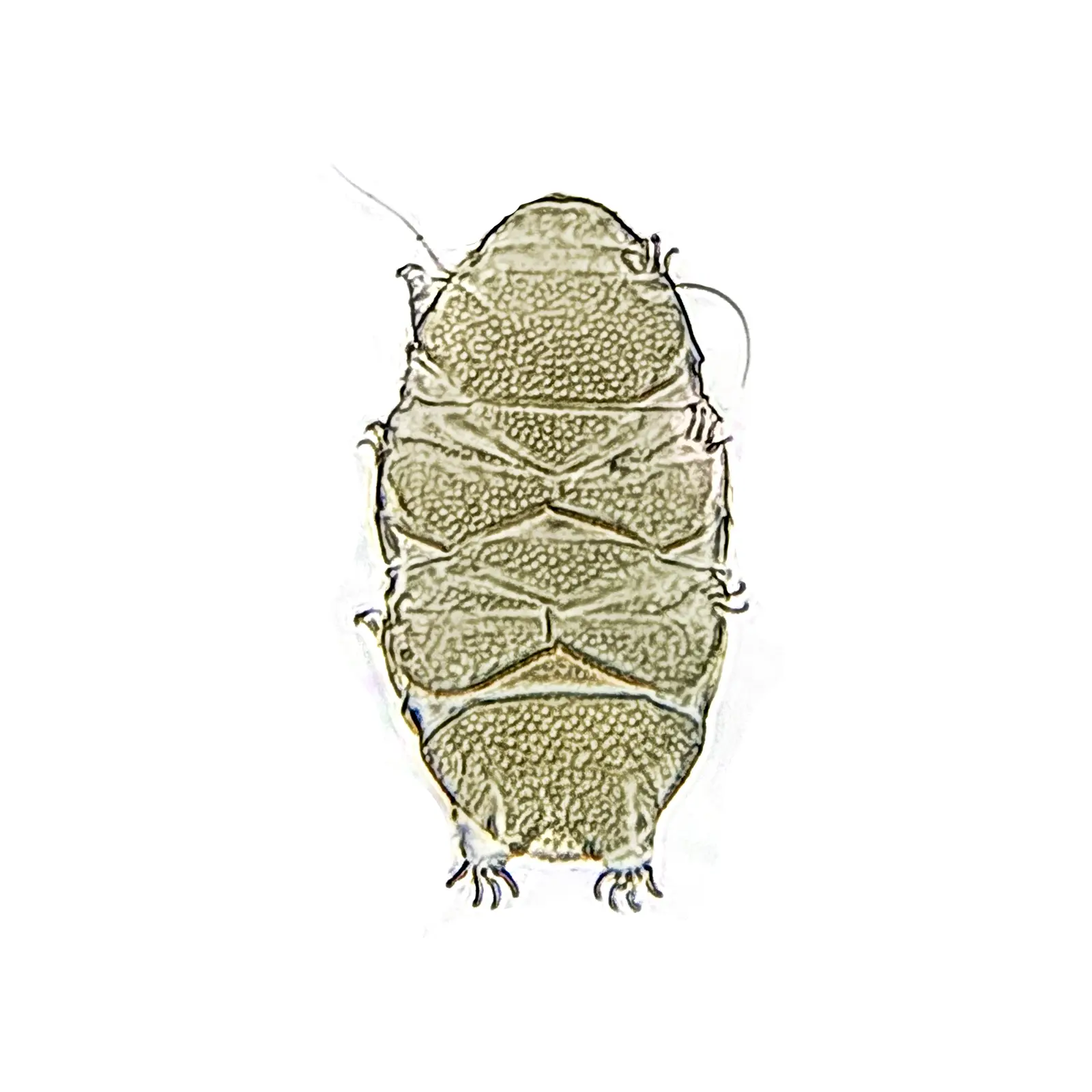
A tardigrade of the order Echiniscoidea, as its photographers labeled it, seen from above. Plates cover its back, and its legs end in claws.
Tardigrades need a film of water around the body to stay active, because water supports the body's fluid skeleton and because oxygen enters through the cuticle. Species in moss or roof gutters are active only when those places are wet. Adults live about two to several months.
What is the tardigrade tun state?
When its moss dries, a tardigrade pulls in its legs and shortens its body into a compact, wrinkled lump called a tun. Inside the tun, metabolism comes to a reversible stop. Biologists call this state anhydrobiosis, or "life without water." Anhydrobiosis is one form of cryptobiosis, or "hidden life," which freezing or lack of oxygen can also trigger.
The tun's shape does physical work. Its folds shrink the surface exposed to dry air, and one measurement cited in a 2017 review found the tun cuts water loss by about half. Researchers in Copenhagen propose that muscle protein filaments hold the tun's shape while it is dry, which they consider essential for reviving later.
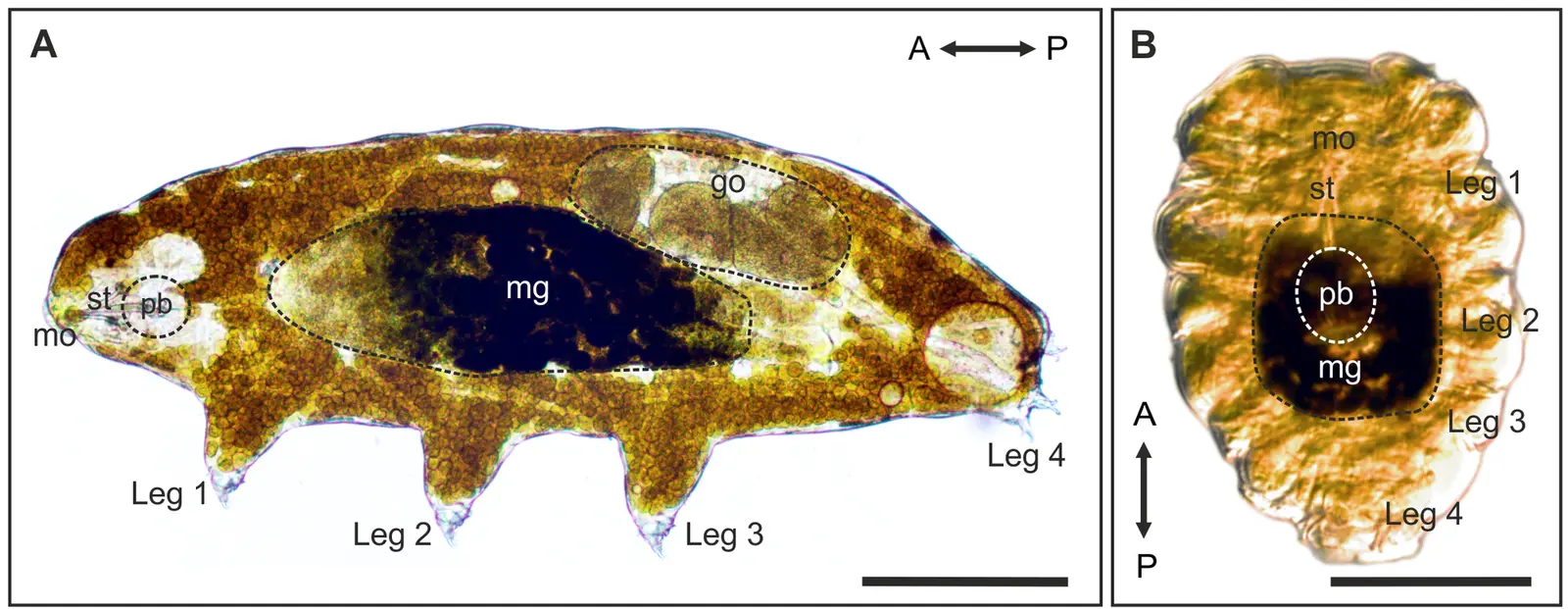
From a 2013 Copenhagen study: Richtersius coronifer awake (A) and as a compact tun (B). Dashed outlines mark the midgut (mg) and pharyngeal bulb (pb) in both, and the gonads (go) in A.
Chemistry varies by species. Some tardigrades make trehalose, a sugar that protects other organisms during drying, but in some species it is found at low levels or not at all.
A 2017 study found that tardigrade-specific proteins with no fixed folded shape are needed for drying tolerance in the species tested. When dried, these proteins vitrify, setting into a glass-like solid instead of crystals. The proteins seem limited to one of the two main tardigrade lineages. So they cannot be the whole explanation.
Here the idea that form is frozen physics comes close to literal, because the inside of a dried tun is thought to set partly into a glass.
The tardigrade tolerance ledger
The full ledger of 16 records also lists how survival was judged and links each source: tardigrade-tolerance-ledger.csv (CSV · JSON label).
| Test | Species | State | Exposure | Result | Source |
|---|---|---|---|---|---|
| Heat | Ramazzottius varieornatus | Awake | 24 h | Half inactive at 37.1 °C; none active after 40 °C | Neves et al. 2020 |
| Heat | R. varieornatus | Dried tun | 1 h | Half inactive at 82.7 °C; none active after 85 °C | Neves et al. 2020 |
| Heat | R. varieornatus | Dried tun | 24 h | Half inactive at 63.1 °C; none active after 70 °C | Neves et al. 2020 |
| Heat | Milnesium tardigradum | Dried | 1 h | Over 90% survived 100 °C; steep drop above | Hengherr et al. 2009 |
| Space vacuum + cosmic rays | M. tardigradum, Richtersius cf. coronifer | Dried, shaded | 10 days in orbit | No significant effect | Jönsson 2019 |
| Space + full solar UV | Same two species | Dried | 10 days in orbit | No survivors | Jönsson 2019 |
| Gamma rays | M. tardigradum | Awake | 1,000–7,000 Gy tested | Half dead at 5,000 Gy, 48 h later | Horikawa et al. 2006 |
| Gamma rays | M. tardigradum | Dried | 1,000–7,000 Gy tested | Half dead at 4,400 Gy, 48 h later | Horikawa et al. 2006 |
| Static pressure | Not named in the abstract | Dried, in perfluorocarbon | Not stated in the abstract | Survived 600 MPa | Seki & Toyoshima 1998 |
| Impact shock | Hypsibius dujardini | Frozen tun | One shot | Survived 0.728 km/s; none at 0.901 km/s | Traspas & Burchell 2021 |
| Time | Acutuncus antarcticus | Frozen at −20 °C | 30.5 years | 2 animals and 1 egg revived; one adult and the hatchling reproduced | Tsujimoto et al. 2016 |
The claim vs. the record
- "Indestructible." Awake R. varieornatus had no active survivors after 24 hours at 40 °C.
- "Survives space." Dried and shaded, yes, for 10 days in orbit. Under full solar ultraviolet, none survived.
- "Survives boiling." Over 90% of dried M. tardigradum survived an hour at 100 °C. After an hour at 85 °C, no dried R. varieornatus became active again.
- "Sleeps for a century." A 2001 review found little evidence. The longest documented case, reported in 2016, is 30.5 years, frozen.
- "Its protein makes human cells radiation-proof." In cultured human cells, it cut X-ray damage to DNA by about 40%.
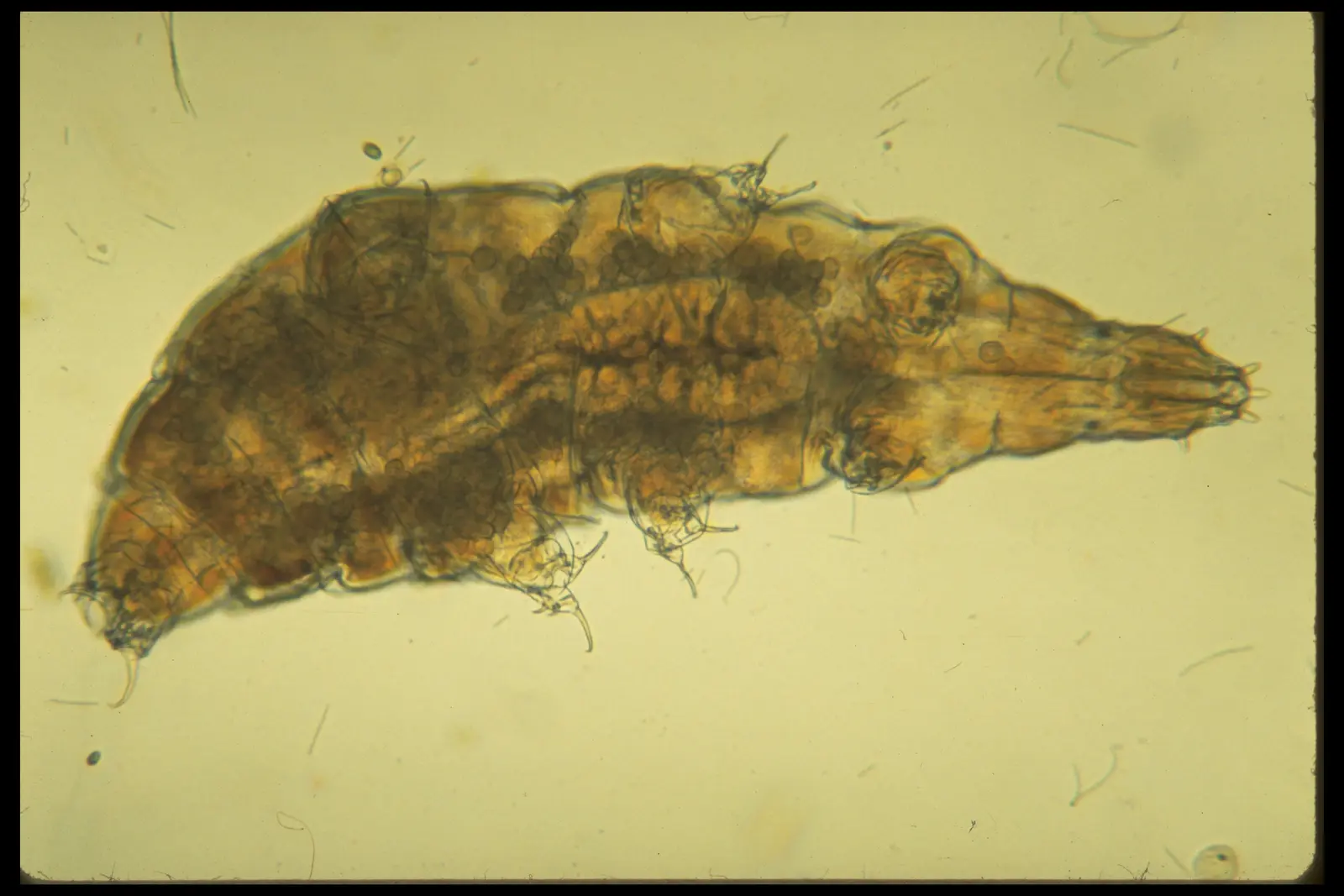
Labeled Milnesium tardigradum by its photographer. This species, dried or awake, appears in five of the table's eleven rows.
Can tardigrades survive in space?
In 2007, the TARDIS experiment on the FOTON-M3 mission exposed dried tardigrades of two species, Milnesium tardigradum and Richtersius cf. coronifer, to open space in low Earth orbit for 10 days. The vacuum there was about 10⁻⁶ pascal. That is roughly one hundred-billionth of sea-level air pressure (101,325 pascals).
Samples shaded from sunlight took the vacuum plus about 100 milligrays of cosmic radiation, a fifty-thousandth of the gamma dose that killed half of awake M. tardigradum in lab tests. Those shaded samples were not significantly affected.
Sunlight changed the result. Under the full ultraviolet spectrum, from 116.5 to 400 nanometers, no animals of either species survived, while under a band limited to UV-A and UV-B, 12% of the M. tardigradum survived. A 2019 review describes those survivors as the first animals known to survive vacuum, cosmic radiation and UV together in space.
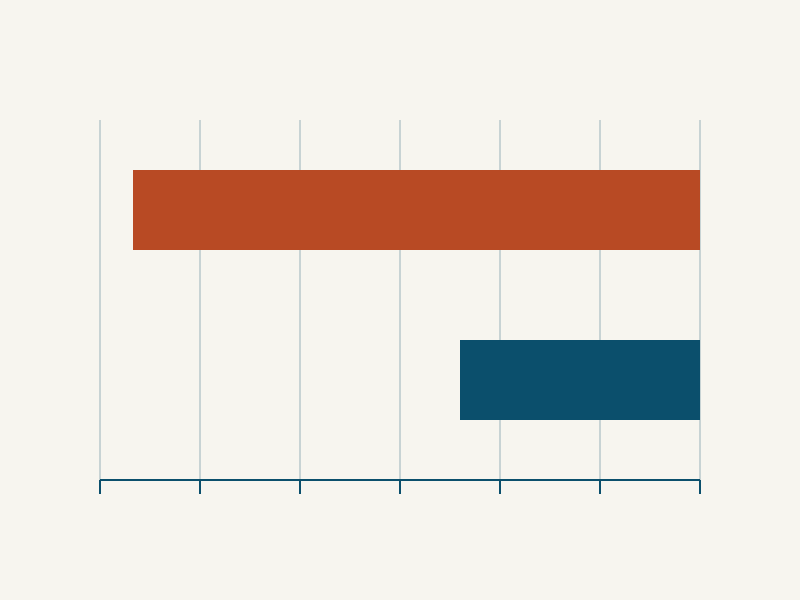
Ultraviolet bands on a 100–400 nm scale, gridlines every 50 nm. Under 116.5–400 nm (coral), no dried tardigrades survived; under 280–400 nm (teal), 12% of M. tardigradum did.
Can tardigrades survive radiation?
Yes, and unlike with heat, drying barely matters. Exposed to gamma rays, awake M. tardigradum had a median lethal dose of 5,000 grays, measured 48 hours later. For dried animals, the figure was 4,400 grays.
A 2019 review says this similar response in wet and dry tardigrades seems to be general, and unexpected. Gamma rays and X-rays do most of their harm by creating reactive oxygen molecules, and that damage should be much higher when water is present. A 2005 study suggested that protective chemicals tied to the dried state do not explain the tolerance, and that efficient DNA repair might. The mechanisms remain largely unknown.
For scale, the U.S. Nuclear Regulatory Commission puts the short-term dose that kills half of exposed people within 30 days at 4 to 5 sieverts, and for gamma rays one sievert equals one gray under U.S. rules. On paper, 5,000 grays is 1,000 to 1,250 times the human dose. But the tardigrade figure counts deaths after 48 hours, not 30 days. And irradiated animals lived shorter lives and produced no hatching eggs.
Not every tardigrade is this tolerant: in the only marine species tested as of 2019, Echiniscoides sigismundi, the median lethal gamma dose was around 1,500 grays, measured 7 days after exposure.
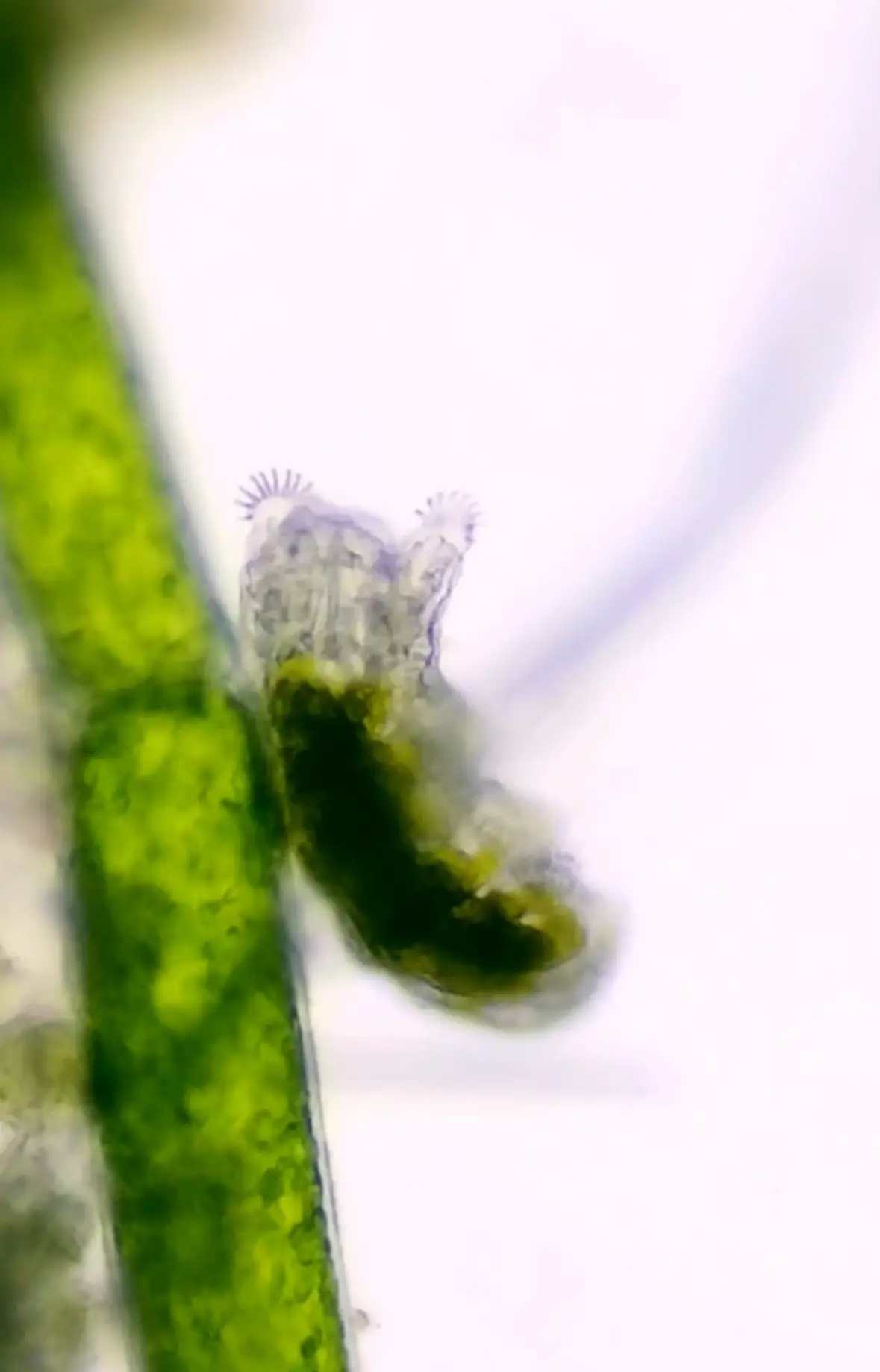
This marine tardigrade was identified on iNaturalist as Echiniscoides sigismundi by three users. As of 2019, it was the only marine species tested with gamma rays.
One protein gets the headlines: in 2016, researchers sequencing the R. varieornatus genome reported a tardigrade-unique protein called Dsup, short for "damage suppressor." In cultured human cells, it reduced X-ray damage to DNA by about 40%. Later work found that it binds nucleosomes, the protein spools that package DNA, and protects that DNA from hydroxyl radicals. A 40% cut still leaves about 60% of the damage, and the test used cells grown in a dish, not whole animals or people.
How much pressure and impact can a tardigrade take?
Dried tardigrades placed in a perfluorocarbon liquid survived 600 megapascals of pressure, two researchers reported in 1998.
NOAA lists the Challenger Deep, the deepest known point in the ocean, at about 10,935 meters. Using NOAA's rule of one added atmosphere per 10.06 meters, the pressure there works out to about 1,088 atmospheres. That comes to about 110 megapascals. The 600-megapascal result is roughly five and a half times that.
A sudden blow is harder. In a 2021 study, researchers froze Hypsibius dujardini into tuns and fired them from a gas gun into sand. Animals survived 0.728 kilometers per second, about 1,630 miles per hour, with a peak shock near 0.86 gigapascals, but none survived 0.901 km/s, about 1.14 gigapascals. Above 0.825 km/s, only fragments were recovered.
The study used only two or three animals per shot, and the authors call for larger tests. They note that this shock limit sits well below the static pressure limit; the static tests they cite went as high as 7.5 gigapascals, in a 2008 study. Rock blasted off Earth by giant impacts is estimated to hit the Moon at about 2.5 km/s on average, and the authors' figures put typical impacts above the tardigrade limit, though a minority would be slow enough to fall within it.
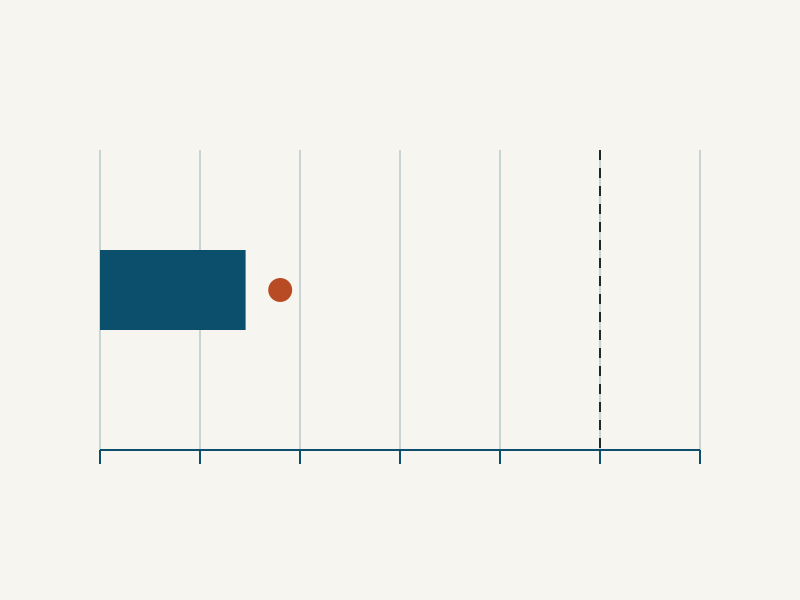
Gridlines every 0.5 km/s. All frozen tuns survived up to 0.728 km/s (teal bar) and none at 0.901 km/s (coral dot); dashed line: 2.5 km/s, the estimated average speed of Earth rock hitting the Moon.
How long can a tardigrade stay dormant?
Stories of century-long revivals do not hold up well. A 2001 review found little real evidence for them. It suggested about a decade as a more realistic upper limit for the hardiest dried tardigrades.
The longest documented revival, as of its 2016 report, came from cold storage: a moss sample collected in Antarctica in 1983 was kept at −20 °C, twenty degrees below the freezing point of water, for 30.5 years. Two individuals and one egg of Acutuncus antarcticus recovered. Their slow recovery suggested, to the authors, that damage built up over 30 years had to be repaired. One revived adult and the animal that hatched from the egg both went on to reproduce repeatedly.
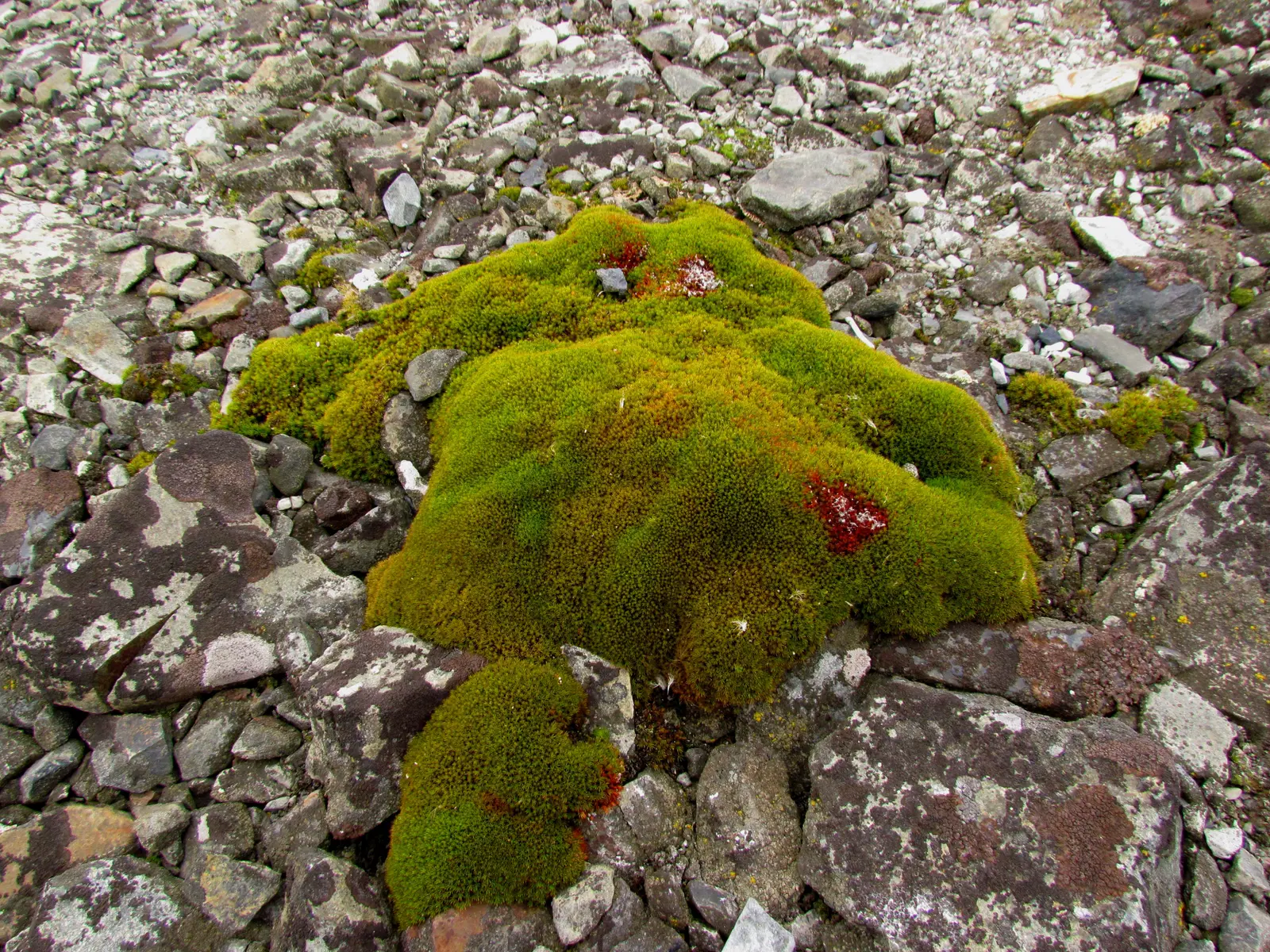
Moss among rocks at Esperanza Station on the Antarctic Peninsula in 2011. The 30.5-year revival came from a separate moss sample, collected in Antarctica in 1983.
How much heat can a tardigrade survive?
The Ramazzottius varieornatus in the 2020 heat study came from a roof gutter in Nivå, Denmark, a site that freezes in winter and often dries out in summer. Researchers in Copenhagen heated groups of about 20 animals and counted how many were active 48 hours later.
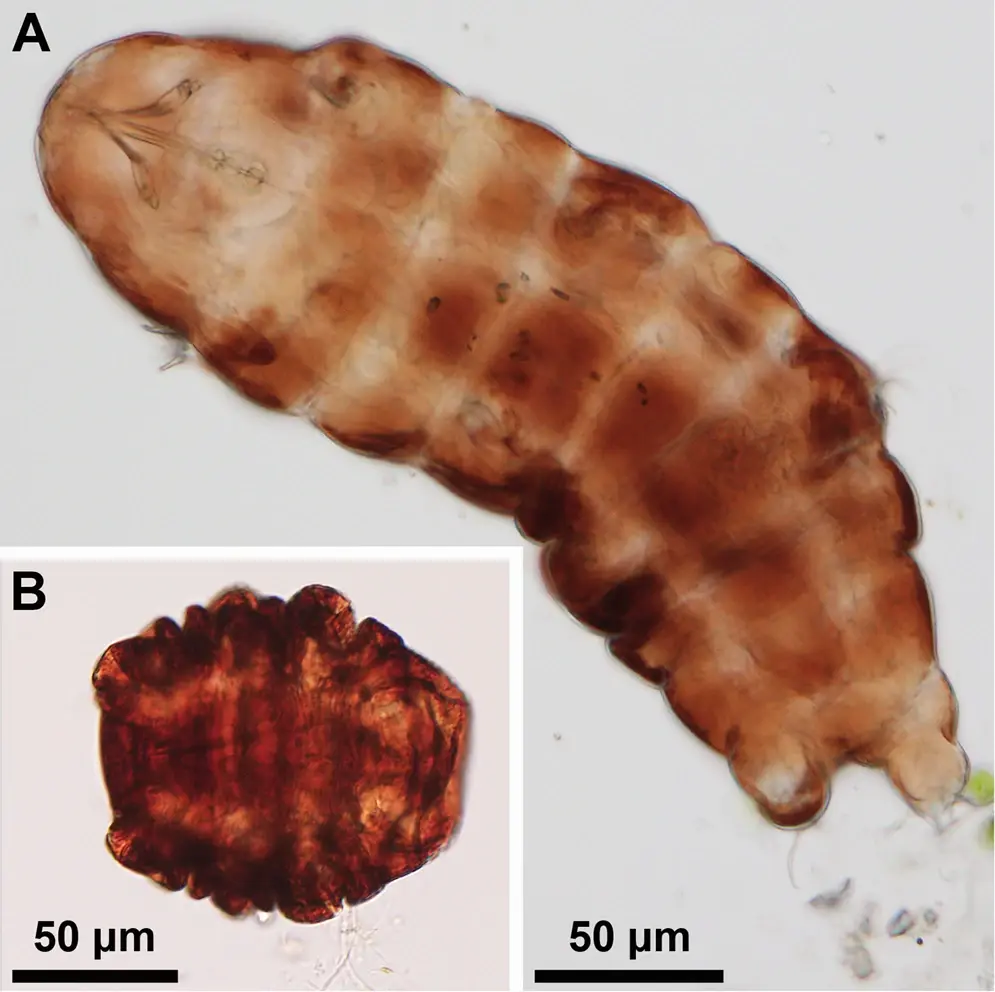
Light micrographs from the 2020 heat study: Ramazzottius varieornatus awake (A) and dried into a tun (B). Scale bars: 50 µm.
Awake animals did poorly: after 24 hours at 37 °C, 54% were active. After 40 °C, none were. The team's model put the temperature that stops half of them at 37.1 °C, close to the average normal human body temperature of about 37 °C. Four hours of stepped warming beforehand nudged that figure to 37.6 °C.
Dried tuns did far better, but for them time is part of the dose. After a 1-hour exposure, the 50% point was 82.7 °C, and 89% were active after 80 °C. Over 24 hours, it fell to 63.1 °C. The chart below shows both gaps: over the same 24 hours, drying raised the 50% point by 26.0 °C, while lengthening the exposure from 1 to 24 hours lowered it by 19.6 °C.
Species differ widely. In a 2009 study of nine species heated dry for 1 hour, more than 90% of Milnesium tardigradum survived 100 °C, but no animals from the families Macrobiotidae and Echiniscidae did. For awake tardigrades of several species, studies reported total mortality somewhere between 36 and 39 °C.
Older reports, summarized by the 2020 team, set the bar higher: 120 to 125 °C for a few minutes (Doyère, 1842) and 110 to 151 °C for 30 minutes (Rahm, 1921). Their methods and exposure times differ from the modern 1-hour tests. So the numbers cannot be compared directly.
Two explanations for the heat limit could both be true. The 2009 team detected a glass transition, the point where a glassy solid starts to soften, in a heated dry tardigrade and proposed that it limits heat tolerance. The 2020 team suggested that heat damages proteins the tun depends on. Neither has settled the question.
Tardigrade FAQ
How big is a tardigrade?
Most tardigrades are 0.25 to 0.5 mm long, the same range as a grain of medium sand on the Wentworth grain-size scale. Published maximums differ: about 1 mm in one review and up to 2.1 mm in another. Each of the four body segments behind the head carries one pair of legs, so adults have eight legs.
Can you see a tardigrade without a microscope?
A tardigrade is hard to see without a microscope. Most are 0.25 to 0.5 mm long, and a 2019 review says microscopic water animals such as tardigrades, smaller than one or two millimeters, cannot easily be seen with the naked eye. In a 2023 study of Baltic Sea rock pools, researchers searched for tardigrades under a stereo microscope, starting at 32 times magnification, and used a light microscope at up to 1,000 times to identify them to genus.
Where do tardigrades live?
Tardigrades live worldwide, from the deep ocean to mountaintops. They turn up in seawater, fresh water, damp moss, lichen, soil and roof gutters. Land species stay active only while a film of water surrounds them. When those places dry out, many survive as dormant tuns.
What kills a tardigrade?
Heat is the clearest weakness of awake tardigrades. In one species, a day at 37.1 °C stopped half of them and 40 °C stopped all. Dried tuns tolerate far more, but long heating still kills them, as does full-spectrum ultraviolet light in space. In lab tests, impacts at 0.9 km/s were fatal.
Next, look at bdelloid rotifers, most of which can also dry out and revive at any stage of life: Bdelloid Rotifers: Hundreds of Species, Not One Known Male.
Figure: The heat that stops half of them
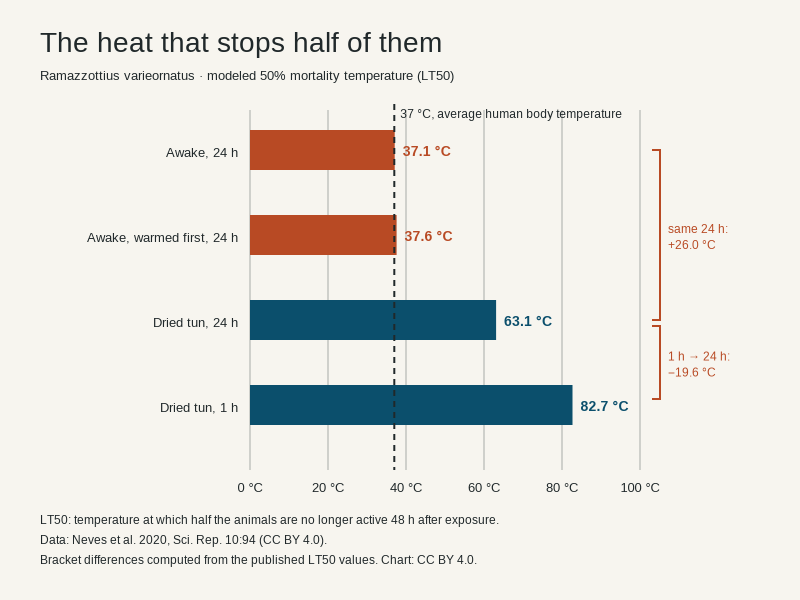
Modeled temperature at which half of Ramazzottius varieornatus are no longer active 48 hours after exposure. Bars are drawn by this site from the published LT50 values in Neves et al. 2020 (CC BY 4.0); the bracket differences (+26.0 °C, −19.6 °C) are computed from those values. The 37 °C line is the average normal human body temperature given by MedlinePlus.
Source card
- Images: eight photographs and micrographs, seven via Wikimedia Commons and one via iNaturalist (three CC BY 4.0, three CC BY-SA 4.0, and two scanning electron micrographs from Schokraie et al. 2012 listed as CC BY 2.5), no public-domain plates, and three charts drawn by this site for this page; each license was checked against its source page and, for journal figures, the original article, on 2026-10-10 for the two electron micrographs and on 2026-10-13 for the other six.
- Classification: GBIF Backbone Taxonomy lists Tardigrada as an accepted phylum (usageKey 14) and every species named here as accepted. One review notes that the tardigrade once called H. dujardini in genome studies is now H. exemplaris; this page keeps each study's name.
- Data: every number traces to a numbered source below. The ledger CSV adds the survival check and source link for each row.
Corrections: 2026-10-13: Clarified which static pressure limit the 2021 impact study compares against: the 7.5 gigapascals reached in a 2008 test it cites, not the 600 megapascals given above (the text read as if the impact limit were below 600 megapascals).
2026-10-14: Added the FAQ answer "Can you see a tardigrade without a microscope?", drawn from a 2019 review and a 2023 study of Baltic Sea rock pools (the entry did not answer this question before).
Sources
- Neves RC, Hvidepil LKB, Sørensen-Hygum TL, Stuart RM, Møbjerg N. "Thermotolerance experiments on active and desiccated states of Ramazzottius varieornatus emphasize that tardigrades are sensitive to high temperatures." Scientific Reports 10:94 (2020) doi.org/10.1038/s41598-019-56965-zfull text read via Europe PMC, PMC6952461
- Hengherr S, Worland MR, Reuner A, Brümmer F, Schill RO. "High-temperature tolerance in anhydrobiotic tardigrades is limited by glass transition." Physiological and Biochemical Zoology 82:749–755 (2009) doi.org/10.1086/605954abstract read via Europe PMC, PMID 19732016
- Jönsson KI. "Radiation Tolerance in Tardigrades: Current Knowledge and Potential Applications in Medicine." Cancers 11:1333 (2019) doi.org/10.3390/cancers11091333full text read via Europe PMC, PMC6770827
- Horikawa DD, et al. "Radiation tolerance in the tardigrade Milnesium tardigradum." International Journal of Radiation Biology 82:843–848 (2006) doi.org/10.1080/09553000600972956abstract read via Europe PMC, PMID 17178624
- Jönsson KI, Harms-Ringdahl M, Torudd J. "Radiation tolerance in the eutardigrade Richtersius coronifer." International Journal of Radiation Biology 81:649–656 (2005) doi.org/10.1080/09553000500368453abstract read via Europe PMC, PMID 16368643
- Erdmann W, Kaczmarek Ł. "Tardigrades in Space Research - Past and Future." Origins of Life and Evolution of Biospheres 47:545–553 (2017) doi.org/10.1007/s11084-016-9522-1full text read via Europe PMC, PMC5705745
- Seki K, Toyoshima M. "Preserving tardigrades under pressure." Nature 395:853–854 (1998) www.nature.com/articles/27576abstract page read
- Traspas A, Burchell MJ. "Tardigrade Survival Limits in High-Speed Impacts—Implications for Panspermia and Collection of Samples from Plumes Emitted by Ice Worlds." Astrobiology 21:845–852 (2021) doi.org/10.1089/ast.2020.2405full text read via Europe PMC, PMC8262385
- Tsujimoto M, Imura S, Kanda H. "Recovery and reproduction of an Antarctic tardigrade retrieved from a moss sample frozen for over 30 years." Cryobiology 72:78–81 (2016) doi.org/10.1016/j.cryobiol.2015.12.003abstract read via Europe PMC, PMID 26724522
- Jönsson KI, Bertolani R. "Facts and fiction about long-term survival in tardigrades." Journal of Zoology 255:121–123 (2001) doi.org/10.1017/S0952836901001169abstract
- Hashimoto T, et al. "Extremotolerant tardigrade genome and improved radiotolerance of human cultured cells by tardigrade-unique protein." Nature Communications 7:12808 (2016) doi.org/10.1038/ncomms12808abstract read via Europe PMC, PMID 27649274
- Boothby TC, et al. "Tardigrades Use Intrinsically Disordered Proteins to Survive Desiccation." Molecular Cell 65:975–984 (2017) doi.org/10.1016/j.molcel.2017.02.018abstract read via Europe PMC, PMID 28306513
- U.S. Nuclear Regulatory Commission. "Lethal dose (LD)," NRC Glossary www.nrc.gov/reading-rm/basic-ref/glossary/lethal-dose-ld.html
- U.S. Code of Federal Regulations, 10 CFR 20.1004, "Units of radiation dose" (Table 1004(b).1) www.ecfr.gov/current/title-10/chapter-I/part-20/subpart-A/section-20.1004regulation text (eCFR)
- NOAA National Ocean Service. "How deep is the ocean?" oceanservice.noaa.gov/facts/oceandepth.html
- NOAA National Ocean Service. "How does pressure change with ocean depth?" oceanservice.noaa.gov/facts/pressure.html
- NIST. "CODATA value: standard atmosphere." physics.nist.gov/cgi-bin/cuu/Value?stdatm
- MedlinePlus Medical Encyclopedia. "Body temperature norms." medlineplus.gov/ency/article/001982.htm
- U.S. Geological Survey. Open-File Report 2006-1195, "Nomenclature," grain-size chart (modified from Wentworth 1922) pubs.usgs.gov/of/2006/1195/htmldocs/nomenclature.htmalso https://pubs.usgs.gov/of/2006/1195/htmldocs/images/chart.pdf
- GBIF Backbone Taxonomy, species match API for Tardigrada, the tardigrade species named on this page, and for comparison Insecta, Brachyura and Ursidae api.gbif.org/v1/species/match?name=Tardigrada
- Halberg KA, Jørgensen A, Møbjerg N. "Desiccation tolerance in the tardigrade Richtersius coronifer relies on muscle mediated structural reorganization." PLoS ONE 8(12):e85091 (2013) doi.org/10.1371/journal.pone.0085091abstract, author affiliations, license statement and Figure 1 legend read via Europe PMC (PMC3877342)
- Fontaneto D. "Long-distance passive dispersal in microscopic aquatic animals." Movement Ecology 7:10 (2019) doi.org/10.1186/s40462-019-0155-7full text (CC BY 4.0)
- Troell S, Jönsson KI. "Occurrence of tardigrades and morphometric and chemical conditions in rock pools by the Baltic Sea." Scientific Reports 13:19776 (2023) doi.org/10.1038/s41598-023-46697-6full text (CC BY 4.0), methods section
Cite this page
Plankton to Plumage. “Tardigrades: Heat, Sunlight in Space and Fast Impacts Can Kill Them.” October 12, 2026, updated October 14, 2026. https://planktontoplumage.com/microscopic/tardigrade/
Add the date you read the page after the address if your style guide asks for it.